In October 2023, finally, the first book with a total focus on Product Operations was released by Melissa Perri and Denise Tellis. In this episode of the Product Ops Podcast the authors talked about their launched:
📖 The Book
This was already a long-awaited book by the Product Operations community since Melissa Perri wrote a chapter on the topic in the “Outcome-Focused Communication” part of her iconic book Escaping the Build Trap. By the way, a talk she gave as a keynote at the PRODUCTIZED event is worth our time.
Since then, the community has been eager to have more in-depth support material. Even with great initiatives such as the Product-Led Alliance “State of Product Ops” report with insights and findings from the leading minds in the industry and with the new report “Product Ops Scenario in Brazil“, still lacked content that brought cases and a more detailed overview of the main challenges and how to deal with them on a daily basis.
What I liked most about the book is the guiding thread of a hypothetical company (Pipeline 3k) that guides us through the problems and challenges faced by a Product Operations team. In addition to having cases from companies such as Amplitude, athenahealth, Fidelity, Oscar Health and Blake Samic, relying on his experience as current Head of Product Operations at OpenAI and former Global Head of Product Operations at Uber and Stripe.
Introduction to Product Operations
At the beginning, the introduction presents the concept of Product Operations, the reasons why the area is important, clarity about Product Operations not being a replacement for unskilled product managers and the three pillars:

We know that in each organization specific pillars are defined to attack existing problems, but seeing these pillars described in the book demonstrates the core of Product Operations looking at these more structural perspectives on data, insights, customer, processes and practices.
Pillar 1: Business Data and Insights
“Which enables the collection and analysis of internal data for strategy creation and monitoring. It provides leaders with a view that tracks the progress of outcomes so they can reconcile research and development (R&D) spend and return on investment (ROI). In addition, it contextualizes the business metrics, like ARR and retention, with product metrics to help leaders and product managers make strategic decisions.”
Pillar 2: Customer and Market Insights
“While the first pillar focuses on pulling out information that we generate internally, this pillar facilitates and aggregates research that we receive externally. Part of this is streamlining the insights we receive directly from our customers and users and making them easily accessible for team members to explore. Another part of it is providing the teams with the tools they need to conduct market research, like competitor analysis and total addressable market/serviceable addressable market (TAM/SAM) calculations for potential product ideas.”
Pillar 3: Creating a Product Operation Model – Process and Practices
“This pillar scales the product management value with consistent cross-functional practices and frameworks. It defines the product operating model for the company, which specifies a few things: how the company creates and deploys strategy, how cross-functional teams collaborate around strategy and deployment, and how the product management team functions. Product governance and tool management also fall under this area.”
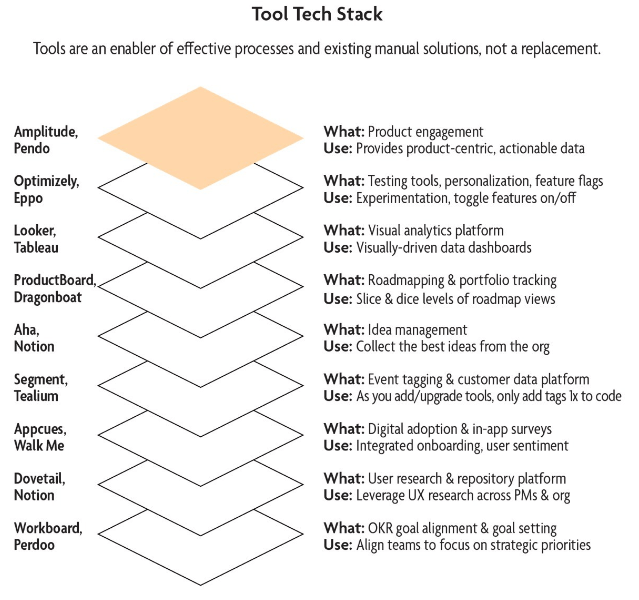
This chapter also shares some tools so that product teams can adopt them as day-to-day facilitators, but not as a final solution or silver bullet. These tools improve processes and practices, but do not replace them:
📕 Resources
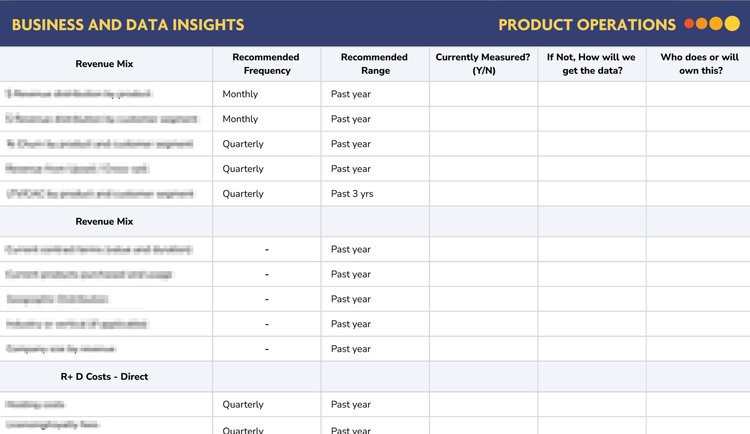
To close the book, the authors share two very practical resources:
Product Operations Capabilities Map: To evaluate your current set up and identify the gaps.
Product Operations Job Descriptions: To help you get started with hiring. Includes VP/Director of Product Operations, Product Data Analyst, User/ Market Insights Analyst, and Product Operations Manager.

Final Thoughts
Well, I think this is a must-read for anyone who wants to get closer to or already works in the Product Operations area. The book is a great guide to help you with product structuring challenges! In addition to bringing real cases and lessons learned from people in the area to connect around the world!
You read the book? Share with the community what you thought of the reading. 💡
 Thaís Rigolon
Leave a comment